
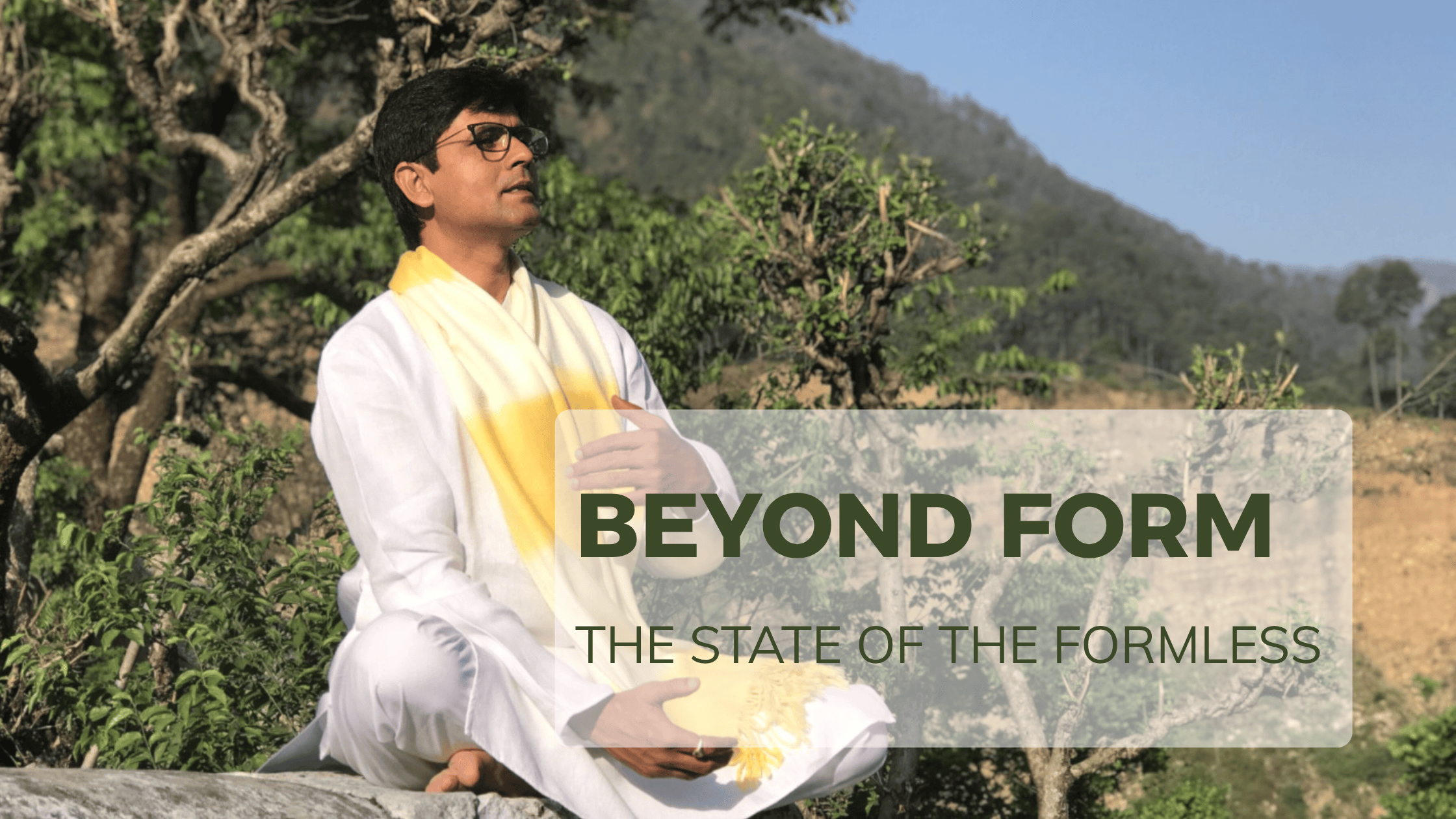
भवप्रत्ययो विदेहप्रकृतिलयानाम्॥१९॥
Bhavapratyayo videhaprakṛtilayānām
For those beings who are formless and for those merged in primal nature, existence is born of latent impressions.
Introduction:
There are numerous seekers along the yogic way, but they differ. Some are motivated by effort and discipline; others transform on account of intense, hidden impressions from previous lives. In Yoga Sutra 1.19, Patanjali points us to a very subtle category of individuals — those that could appear liberated or profoundly calm but are not free from the influence of prakriti (Nature). This verse provides a window into the higher realms of existence and the subtle distinction between temporary tranquility and ultimate liberation.
Let us explore further.
Word-by-Word Translation:
Bhava – Becoming, existence, or worldly manifestation
Pratyaya – Cause, impression, conviction
Videha – Bodiless beings
Prakritilaya – Those dissolved in or merged with nature (Prakriti)
Bhavapratyayo – Born out of or caused by latent impressions or tendencies
“The state of being of bodiless beings (videhas) and those merged into nature (prakritilayas) is a result of latent impressions (bhavapratyaya).”
The Layers of Beings on the Path
In the earlier sutras (particularly 1.17 and 1.18), Patanjali has explained the twofold Samadhi — supported and unsupported. Now he explains two classes of advanced beings who appear to be far on the path, but still haven’t reached the ultimate goal of kaivalya (absolute liberation).
1. Videhas – The Formless Ones
They are very advanced souls that have no physical form. Maybe by deep meditation or previous karma, they are present in subtle forms that are not attached to the material plane. In some yogic and Vedic scriptures, such a soul is described as living in heavenly or ethereal worlds.
However, Patanjali says even they are not free.
They are in a resplendent standstill — an evolved one, yes, but not liberation itself.
2. Prakritilayas – Unified in Nature
They have been absorbed into Prakriti, original nature. Their individuality is on hold. They’ve stopped acting, thinking, and discriminating — temporarily, at least.
This is wrongly taken to be moksha, but it’s not.
For the seeds of samskara (impressions) still exist.
Bhavapratyaya – The Snare of Inherent Tendencies
The watchword of this sutra is bhavapratyaya — the “cause of becoming” or “the subconscious impressions” which drive beings back into existence.
This implies that even those as evolved as videhas and prakritilayas have not consumed all their samskaras. The subconscious impressions of previous actions still rest latent, waiting for the appropriate opportunity or karmic circumstance to germinate anew.
They are in deep sleep — not in ultimate freedom.
A Gentle Warning to the Yogi
This sutra is a warning as much as it is informational.
It’s a reminder to seekers:
Don’t confuse higher states with ultimate freedom.
Don’t be satisfied with powers, visions, or states of quiet.
Be mindful of the samskaras that quietly propel rebirth.
It’s a challenge to look deeper — beyond bodilessness, beyond nature, and beyond cause.
How Is This Relevant to a Modern Practitioner?
Although most of us aren’t consciously immersed in formless states or dissolving into nature, the lesson is still imperative:
You might feel serene after a meditation practice — but is that serenity based on awareness or escape?
You might find yourself unattached to desires — but have the foundations of those desires been resolved?
You can be imagining progress because there is silence — but will it last or was it just a lull?
In a “peak experience” and temporary peace-fixated world, this sutra is a yogic wake-up call. It schools in discernment (viveka) and the need for total transformation.
Commentary from Tradition
Classical commentators such as Vyasa and Vachaspati Mishra interpret this verse as a warning against spiritual complacency. The condition of the videhas and prakritilayas could persist for aeons, yet remain a conditioned state — tied to time, karma, and unspent impressions.
Swami Vivekananda describes:
“There are certain beings who become formless, and certain others who merge in nature. But both are still within the realm of bondage.”
Reflective Questions for Seekers:
Am I confusing calmness with absolute freedom?
Are my spiritual practices causing detachment, or merely flight?
What habits keep on recurring in my life — do they originate from unconsumed samskaras?
Can I transcend the dance of Prakriti and savor the nectar of the Self?
Conclusion: Transcending the Formless
Yoga is not merely about achieving ecstatic states — it’s about achieving complete freedom.
Sutra 1.19 reveals that quietude is not the destination if it is given rise by latent tendencies.
We can only achieve kaivalya, unconditioned freedom, through intense self-reflection, burning of impressions, and genuine detachment.
From Yogalife Global
At Yogalife Global, we respect the ancient tradition of Yoga, based on the Yoga Sutras’ teachings. Our training programs and teacher trainings delve not only into physical poses but also into the interiors of yogic philosophy, meditation, and self-awareness.
If you’re willing to look beyond the surface of Yoga, and desire teaching that’s rooted in lineage, join us.
Let the journey extend beyond tranquility — into clarity. Namaste!!