
वितर्कविचारानन्दास्मितारूपानुगमात्सम्प्रज्ञातः॥१७॥
Vitarka-vicāra-ānanda-asmitā-rūpānugamāt-samprajñātaḥ
“Samprajñāta Samādhi is accompanied by reasoning, discrimination, bliss, and the sense of ‘I am.”
What Is Samprajñāta Samādhi?
Patanjali, in this profound sutra, introduces us to Samprajñāta Samādhi—a form of deep meditation where the mind is still active but deeply focused. Unlike ordinary concentration or daydreaming, this is a refined, inner awareness that moves through four distinct stages.
This type of samādhi is also referred to as savikalpa samādhi or mental samādhi because it still has some thinking involved—subtle, refined, and contemplative.
This is the start of real inner Yoga—where awareness becomes so concentrated that it turns inwards, shedding illusion and reaching the Self.
Explaining the Sutra Word by Word
Let us comprehend the words used by Patanjali:
Vitarka – Reflective reasoning (associated with the gross elements)
Vicāra – Delicate questioning or discrimination (related to delicate aspects)
Ānanda – Blissful joy (when the mind is purified and serene)
Asmitā – Pure identification of ‘I am’ (not ego, but awareness of identity)
Anugamāt – Followed by, or accompanied by
Samprajñātaḥ – With complete knowledge or perception; cognizant samādhi
This sutra shows that meditation goes deeper in layers, each layer dissolving into the next as the mind quietens and becomes more subtle.
Four Layers of Samprajñāta Samādhi
1. Vitarka Samādhi – The Reasoning Stage
Here, the mind is thinking about a tangible object, such as the form of a deity, a symbol (such as OM), or even the breath. The intellect is working on gross-level thinking. There is still a feeling of separation between the meditator, the process, and the object.
This is appropriate for beginners or those meditating with form or mantra.
2. Vicāra Samādhi – The Level of Subtle Discrimination
Since the mind settles down, it shifts to subtle Resource—contemplating formless ideas such as the elements (space, air, etc.), or upon the mind’s own nature. The duality starts disintegrating and subtle knowing dawns.
This stratum is characterized by clearness and depthful peace.
3. Ānanda Samādhi – The Bliss State
When even the faintest discrimination vanishes, what is left is sheer joy—not from any thing, but from the peaceful, clean mind. This is not emotional happiness; it is inner satisfaction, unshakable, untouched.
This bliss is derived from stability, and not stimulation.
4. Asmitā Samādhi – The Feeling of I-Am-ness
Here is only pure existence—a quiet “I am” that is not ego, but the final cover before the experience of the Self. There is no object, no thought, no pleasure from an experience—only a shining presence.
This condition brings one to Asamprajñāta Samādhi—beyond the mind altogether.
Why This Sutra Matters to Seekers Today
In the busy world we live in today, we tend to imagine meditation as merely closing our eyes and letting go. But Patanjali is providing us with a blueprint to move much deeper than that. Here’s how He’s leading us:
Concentration (dharana) gives way to profound meditation (dhyana)
Meditation expands into knowledge-saturated samādhi
And lastly, that dissolves into liberation from the known
Real Yog isn’t about avoiding life—it’s about viewing life from the inside out.
Guruji’s Guidance: The Inner Climb
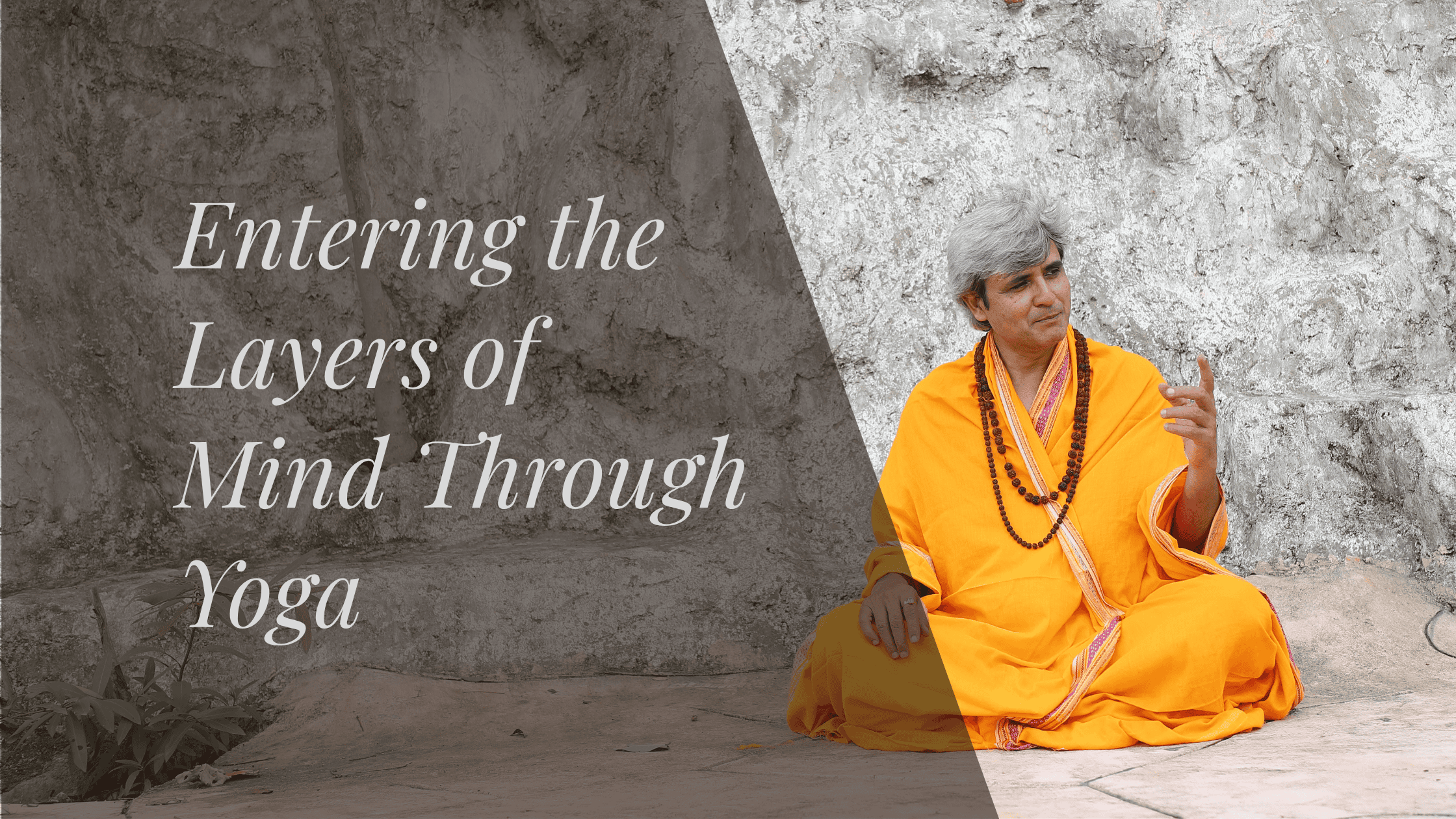
Dr. Radheshyam Mishra, fondly referred to as Guruji, typically describes that this practice is akin to climbing a mountain of awareness.
In his teacher training programs, Guruji teaches not only how to meditate, but how to notice the meditator, how to understand when you are caught in Vitarka or Vicāra—and how to go further.
His body of work over several decades, training thousands of teachers globally, is deeply informed in this inner technology of awareness.
“Meditation isn’t becoming someone. It’s recognizing you’ve always been something vast, still, and awake.” – Guruji
Journal Reflection for Practitioners
Reflect on the following questions:
Which level do I know in my practice?
Am I searching for bliss? Or do I have the ability to sit with the pure ‘I am’?
What propels me deeper: mantra, breath, or silence?
Even being aware of where you are is a huge step forward.
Applying This in Your Daily Life
Even if you’re not a yogi living in caves or retreat centers, this sutra applies to you.
Practice stillness daily—not just to feel good, but to go inward.
Observe the process of meditation: Is it active? Blissful? Silent?
Join study groups or teacher training to explore with guidance.
This knowledge isn’t just for saints—it’s the core of what every seeker is invited to experience.
Final Thought: The Journey Has Begun
Sutra 1.17 is an invitation to embark on the path of higher awareness. You don’t have to jump into silence—you simply have to move forward, inward.
Wherever you choose to start with breath, mantra, or the humble question “Who am I?”—you’re following the very path that Patanjali charted.
And that path, patiently, brings you back to yourself.
Go Deeper
If this Sutra resonated with you, we encourage you to investigate:
✅ Guruji’s Classical Teacher Training Programs
✅ Yoga Sutra Study Groups with weekly contemplations
✅ Special classes on meditation, Yog Darshan, and Self-awareness
Visit us at: www.yogalifeglobal.com
Let the Sutras govern your quiet. Let your quiet disclose your truth.
Leave a Reply